

Intelligence doesn’t always manifest itself on report cards; sometimes, it can be seen in these small things your child does daily.
An insatiable, deeply specific curiosity

Most kids ask “why”, but truly smart kids go much deeper than that. They demand to know how and why things operate the way they do, and will quickly find holes in your answers. They also develop overwhelming, laser-focused fixations, whether it’s orbital mechanics, transit maps, or marine biology, researching to encyclopedic knowledge.
Strong self-motivation and independent thinking

Gifted kids aren’t motivated by arbitrary commands or sticker rewards. They have strong intellectual independence and want to form their own conclusions about life, not just conform to what other kids think is cool or what some adult tells them is what they should think. They have an internal desire to learn new skills and won’t stop trying until they’ve reached their own standard of competence.
Rapid information processing and learning speed

Intelligent children need less repetition in order to learn something more complicated. From learning to play a strategic board game to learning an instrument or speaking another language, they effortlessly connect abstract ideas and skip intermediate steps.. They’re good at discerning underlying patterns, so they can figure out how to do something new without repetitive instructions.
Unusually long attention span for favored tasks

Gifted children can become distracted or bored with mundane tasks that require little stimulation very quickly. However, once they’re focused on something that tickles their brain, their attention span is unbreakable. They’ll spend hours building insanely complicated sets, reading textbooks for fun, or cracking brain teasers without tiring.
Advanced vocabulary and language skills
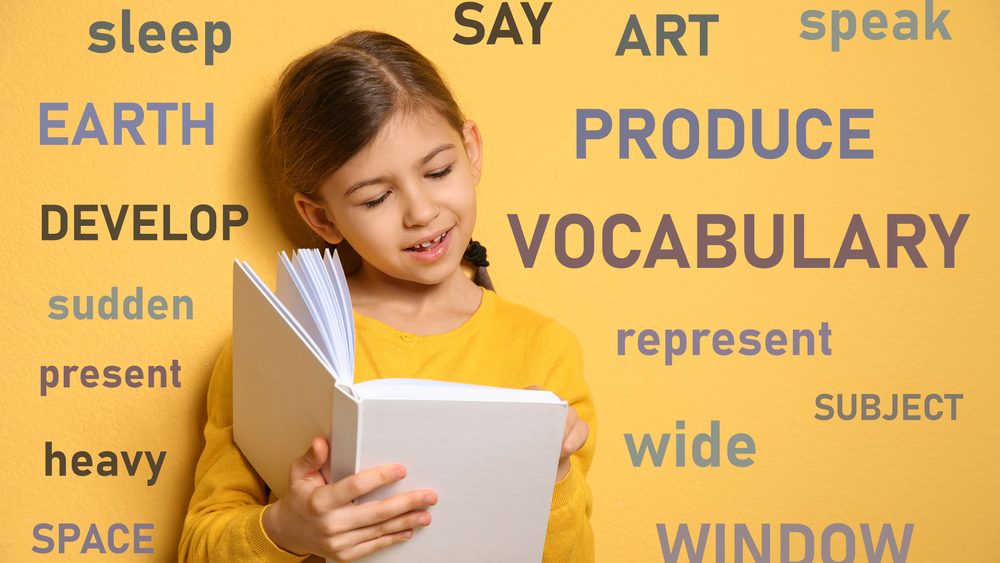
Gifted kids may learn to talk at an early age, but more importantly, they use language with surprising precision. Gifted children rapidly outgrow the use of simplistic baby language. They want precise words to convey their precise thoughts. They easily pick up subtle language, metaphors, double meanings, and puns without explanation and they often use advanced sentence structure that surprises adults.
High sensitivity and emotional depth

Intelligence connects closely with emotions. Intelligent children are often sensitive to the slightest emotional nuances in their surroundings. They can be deeply empathetic to others and extremely reactive to injustice. Since their brains are capable of imagining the future far beyond the immediate present, they can also think about global concerns or existential crises much earlier than other kids.
Exceptional memory and observation skills

These types of children are like human tape recorders. They have excellent long-term memory skills as well as an internal radar that picks up all sorts of environmental stimuli. They will spot small alterations to how a room is decorated or catch minute differences in a story you read to them weeks ago. Recalling facts, rules, and past conversations with pinpoint accuracy means they won’t let you slide away from a forgotten promise.
Creative, out-of-the-box problem solving

Smart children never feel bound by rules or by typical approaches when presented with a problem. They are always thinking about how to take a different path to improve efficiency or expedite tasks. They like seeing how many ways there are to solve a problem, mixing unrelated concepts, or changing the rules of a game to make it more strategic.
A strong preference for older friends or adults

Gifted kids process things quickly and talk about mature topics that are way beyond their age. It can be hard for them to find peers they truly click with at their age level. So they tend to seek out older kids, teachers, or adults who can talk with them, understand their advanced interests, and argue with them on equal grounds.
Early understanding of abstract concepts

For most children, early thought centers around physical things. Exceptionally intelligent children have little trouble dealing with abstract theories at a much earlier age. They think about the meaning of time, what’s fair or not, morals, and what makes people do certain things. Rules are not just something that you have to blindly follow but logical agreements that can be questioned, negotiated, and thought about.
A quick, dry, or sophisticated sense of humor

A developed sense of humor involves rapid cognitive association, perception of subtle irregularities, and predicting surprise endings. Smart kids develop an ear for puns, irony, and dry sarcasm early on. They enjoy witty and timely remarks about life events. Their humor is based on understanding social situations, not just lowbrow physical humor.
High energy levels and low sleep needs

A busy brain seldom powers down without protest. Many parents report their gifted child has boundless brain energy that generates new ideas and questions all night long. Since their brains are working overtime processing and making connections, many kids resist bedtime and need less sleep overall to feel wide awake.